

Leather Furniture Guide
Picking the right leather for real life—types, expectations, and how to match leather to your lifestyle.
Leather for How You Live
Leather is one of the most rewarding upholstery choices—when you match the right type to your lifestyle. This guide covers how leather is made, the key differences between aniline, semi-aniline, and protected leathers, what to expect as leather ages, and how to care for it properly.
Use the tabs below to build your leather knowledge, then explore our recommended brands at the bottom.
What to Know
Leather from Every Angle
Every leather hide starts with raw material, and the tanning process determines its character. Understanding the basics helps you appreciate why leather quality varies so much.
Hide selection: Top-grain leather uses the outer layer of the hide—the strongest, most durable part. Split leather uses the inner layers and is weaker. Bonded leather (ground-up scraps glued together) should be avoided entirely for furniture.
Tanning: The tanning process converts raw hides into stable, usable leather. Chrome tanning is the most common method and produces soft, consistent leather. Vegetable tanning uses natural tannins and produces leather that develops richer patina over time, but it’s more labor-intensive.
Finishing: After tanning, hides are dyed, conditioned, and finished. The amount of finishing applied determines the leather ‘type’—from minimally treated aniline to heavily protected corrected-grain. More finishing means more uniformity and stain resistance; less finishing means more natural character and softness.
Key Takeaway: Don’t get caught up in marketing terms. Ask about the actual hide quality (top-grain vs. split) and finishing process.
Braden’s tip: We’ll show you the difference in person—touch matters more than terminology.
‘Top grain’ is the most important term to understand when shopping for leather furniture. A hide is split into layers, and only the outer layer—the top grain—has the dense, tight fiber structure that makes leather strong, breathable, and long-lasting. Full-grain is top-grain leather left uncorrected; it’s the best of the best. Everything below that outer layer is a ‘split,’ and it’s dramatically weaker.
How cheaper leather cuts corners:
- ‘Genuine leather’ (split hide): Sounds reassuring, but it’s a marketing term for the weaker inner layers—usually coated and embossed to imitate real grain. It stretches, sags, and cracks far sooner than top grain.
- Bonded leather: Ground-up leather scraps glued to a fabric backing—often only 10–20% actual leather. It peels and flakes within a few years, and there’s no fixing it. Avoid entirely.
- Bicast / PU leather: A thin split coated in polyurethane for a glossy, uniform look. It photographs beautifully on day one, then cracks and delaminates with use.
- ‘Leather match’ or vinyl match: Real leather only where you sit, with vinyl on the sides, back, and outside arms. The two materials age at different rates, and the vinyl panels eventually crack and discolor.
- Heavy correction: Low-grade hides sanded down, stamped with artificial grain, and buried under thick pigment. The result feels stiff and plasticky, and it doesn’t breathe or patina like quality leather.
Questions that expose shortcuts: ‘Is this top-grain leather everywhere—including the sides, back, and cushion backs?’ and ‘Is this hide heavily corrected, or is the grain natural?’ A quality maker answers both without hesitation.
Key Takeaway: If a ‘leather’ sofa is priced too good to be true, it’s almost always bonded, bicast, or leather match. Real top-grain hides are expensive raw material—there’s no shortcut to that.
Ask us: “Is this top grain everywhere, or leather match?” We’ll give you a straight answer on any piece, and show you the difference side by side.
The three main categories you’ll encounter in quality furniture:
- Aniline: The most natural. Dyed with transparent dyes that let the grain show through. Soft, rich, and develops beautiful patina over time. The tradeoff: it shows scratches, spills, and color shifts more easily. Best for adults-only households or anyone who embraces character.
- Semi-aniline: A light protective topcoat is added over the aniline dye. You still get natural feel and some grain character, but with better stain resistance. A good middle ground for most households.
- Protected (pigmented): A thicker topcoat with pigment creates a uniform color and strong stain resistance. The most practical choice for families with kids and pets. Easier to wipe clean, but with less of the ‘raw’ leather character.
Key Takeaway: Ask how you live first, then choose leather type. Don’t pick purely on showroom feel.
Ask us: “Which leather type makes sense for how my family actually uses this room?”
Leather changes over time, and that’s a feature, not a flaw. Setting the right expectations upfront is the key to long-term satisfaction.
What’s normal:
- Color shift: Especially on aniline and semi-aniline leathers, color deepens and mellows with exposure to light and body oils. This is patina—the same process that makes vintage leather jackets and boots so valued.
- Surface marks: Light scratches, scuffs, and ‘character marks’ are part of natural leather’s story. Many can be buffed out with your hand or a soft cloth.
- Softening: Leather breaks in like a good pair of shoes. Seats become more supple in the areas you use most.
Setting expectations:
- If you want your sofa to look exactly the same in year five as day one, choose a protected leather with a heavier topcoat.
- If you love the idea of a piece that develops character and tells a story, aniline or semi-aniline is the way to go.
- Either way, proper care extends leather’s life dramatically.
Key Takeaway: Decide whether you want consistency or character—then pick the leather type that matches.
Ask us: “Can you show me an aged sample so I know what to expect?”
Color strategy for leather:
- Dark leathers (browns, blacks, deep tans) hide wear and aging better. They’re forgiving and tend to look great for years with minimal effort.
- Light leathers (creams, tans, light grays) show more wear and require more attention, but they can be stunning in the right setting. Protected finishes help.
- Undertones matter: Leather can pull warm (red/yellow undertones) or cool (gray/blue undertones). Test samples under your home lighting—showroom lighting can be deceiving.
Care essentials:
- Dust regularly with a soft, dry cloth.
- Keep leather 12–18 inches away from heat sources (vents, fireplaces, radiators) to prevent drying and cracking.
- Blot spills quickly—don’t rub. Use only manufacturer-recommended cleaners.
- Avoid harsh cleaners, saddle soaps, and oils unless the maker specifically recommends them.
- Rotate loose cushions periodically to even out wear.
- Condition leather on the manufacturer’s recommended schedule to maintain suppleness.
Key Takeaway: Test color samples under your home lighting, not just showroom lighting. Day vs. night can change everything.
Ask us: “What cleaning and conditioning products do you recommend for this leather?”
Our leather recommendations depend on how you’ll use the piece:
For premium leather that’s the star of the room:
- Hancock & Moore — High-end leather seating with time-intensive build methods. Double-doweled corners, eight-way hand-tied coils, and Qualux cushion cores.
For family-proof leather with character:
- Rowe Furniture — Offers KidProof leather options on some programs. Strong customization and sustainability through Eco Rowe.
- Smith Brothers of Berne — American-made custom upholstery with top-grain leather options.
For custom leather sectionals and sofas:
- King Hickory — Bench-built with eight-way hand-tied foundations. Especially strong for custom leather sectional configurations.
For all-top-grain leather, made to order:
- Omnia Leather — California-built custom leather seating in a huge range of top-grain hides. Sofas, sectionals, and reclining configurations—real leather all the way around, no vinyl ‘leather match.’
Ask us: “I need leather that works for [my situation]—what should I be looking at?” We’ll narrow the field fast.
Leather That Tells a Story
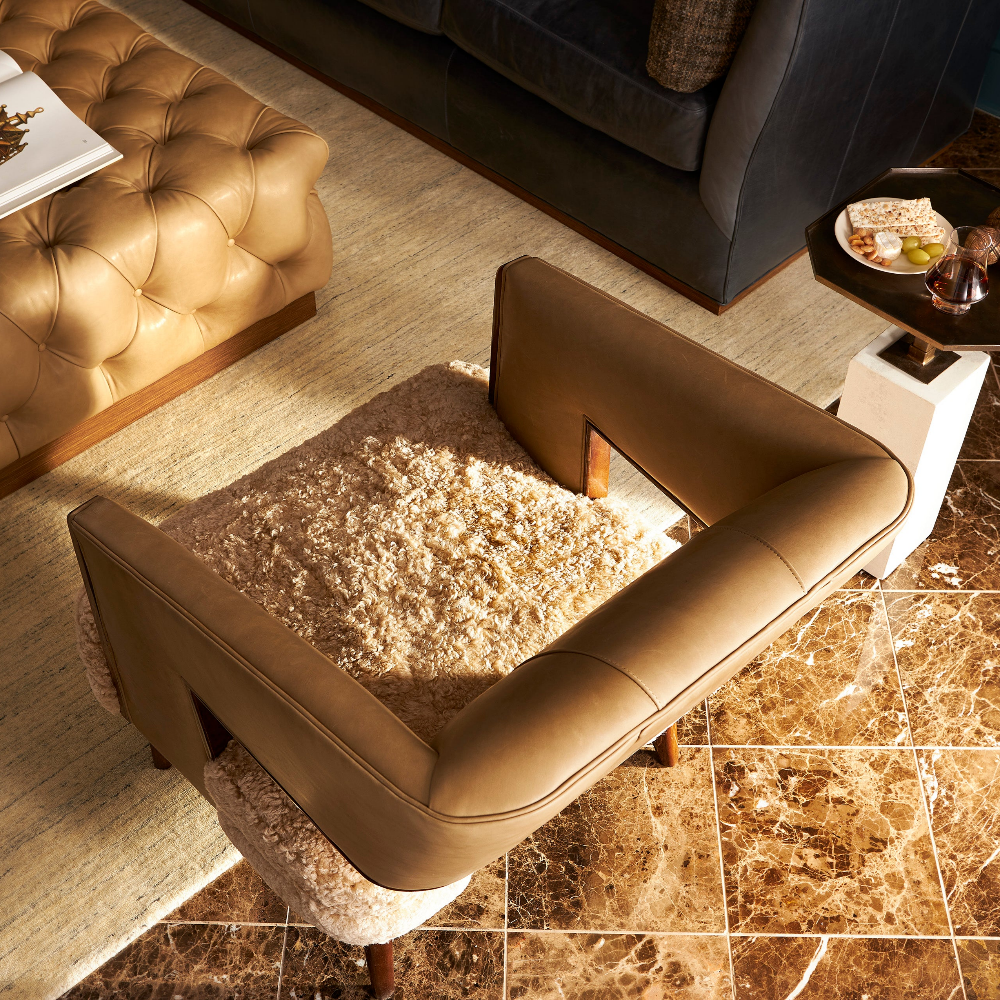
The best leather furniture doesn’t just look beautiful on day one—it gets better with every year of real life.
We’ve spent decades helping East Tennessee families choose leather that matches how they actually live. From premium aniline hides to family-proof protected finishes, seeing and touching the difference in person is what makes the decision click.
Our Picks
Brands to Explore
Hancock & Moore
High-end leather seating with time-intensive build methods. If leather is the star of the room, Hancock & Moore is one of the ‘build it like they used to’ options.
Best for: premium leather seating, classic silhouettes with deep comfort, buyers prioritizing craftsmanship.
Shop Hancock & MooreOmnia Leather
California-built custom leather seating, made to order in a huge range of top-grain hides. Sofas, sectionals, and reclining configurations with real leather all the way around—no vinyl ‘leather match’ shortcuts.
Best for: made-to-order leather seating, top-grain value, reclining and motion configurations.
Explore Omnia Leather
Rowe Furniture
Made-to-order upholstery with KidProof leather options on some programs. Great for families who want leather’s look and feel with added protection.
Best for: custom upholstery, performance fabric households, family-friendly leather.
Shop RoweSmith Brothers of Berne
American-made custom upholstery with quality component sourcing. Top-grain leather options with hardwood maple frames, steel coil springs, and high-quality foam.
Best for: custom sofas, mid-to-high-end leather seating, buyers who want lots of leather choices.
Shop Smith BrothersKing Hickory
Bench-built upholstery with eight-way hand-tied foundations on many styles. A workhorse luxury line—especially strong for custom leather sectionals.
Best for: custom sectionals, American-made leather upholstery, buyers who want long-wearing seat support.
Shop King HickoryWhat’s the difference between aniline, semi-aniline, and protected leather?
Aniline is the most natural and shows character; protected leathers are more uniform and stain-resistant; semi-aniline sits in the middle.
What to Know
- Aniline: soft, natural, develops patina; shows scratches/spills more easily.
- Protected: most practical for kids/pets; easier to wipe; less ‘raw’ character.
- Semi-aniline: tries to balance softness and practicality.
- Ask how you live first, then choose leather type—don’t pick purely on feel in a showroom.
Braden’s Take: We keep samples of all three leather types on the floor. Touch them side by side and the difference clicks immediately—no amount of reading replaces that.
Brands to explore: Hancock & Moore, Rowe Furniture
What’s the difference between top-grain, ‘genuine,’ and bonded leather?
Top grain is the strong outer layer of the hide and the standard for quality furniture. ‘Genuine leather’ and bonded leather are budget materials that look similar on day one but don’t hold up.
What to Know
- Top grain: the outer layer with dense, tight fibers—durable, breathable, and repairable. Full-grain is top grain left uncorrected.
- ‘Genuine leather’: a marketing term for split hide (the weak inner layers), usually embossed to imitate grain. Sags and cracks much sooner.
- Bonded leather: ground scraps glued to a backing—often just 10–20% leather. It peels within a few years and can’t be repaired.
- Watch for ‘leather match’: real leather on the seating surfaces only, with vinyl sides and backs that age differently and crack.
Braden’s Take: Always ask whether a piece is top grain everywhere—including the sides and back. It’s the fastest way to separate real quality from a showroom illusion.
Brands to explore: Hancock & Moore, Omnia Leather
How do I care for leather furniture?
Dust regularly, keep it out of direct sun/heat vents, blot spills quickly, and use the manufacturer-recommended cleaner/conditioner schedule.
What to Know
- Avoid harsh cleaners and oils unless the maker recommends them.
- Rotate cushions (if loose) to even out wear.
- Keep leather 12–18 inches away from heat sources to prevent drying and cracking.
- Expect patina—especially on more natural leathers; it’s part of the appeal.
Braden’s Take: We’ll send you home with the right care products for your specific leather type. Proper care from day one makes all the difference—don’t wait until there’s a problem.
Can leather furniture work with dogs and cats?
Yes—but the type of leather matters. Protected and semi-aniline leathers are the most practical choices for pet households.
What to Know
- Protected leather resists scratches better and is easy to wipe clean. It’s the most forgiving option for claws and accidents.
- Semi-aniline handles well too, though it may show more surface marks over time—many pet owners see that as character.
- Full aniline leather is beautiful but will show claw marks, drool stains, and wear more visibly. Best for pet-free rooms.
- Cat claws on leather: tighter-grain, protected finishes resist punctures better than soft, open-pore aniline hides.
Braden’s Take: We see this question daily in our Knoxville and Maryville showrooms. We’ll show you how different leathers respond to real-life wear so you can pick with confidence.
Brands to explore: Rowe Furniture (KidProof leather), Smith Brothers of Berne
Ready to Touch the Difference?
Leather is one of those things you have to feel in person. Visit our showroom and we’ll walk you through aniline, semi-aniline, and protected samples side by side—matched to how your family actually lives.

Est in 1956
With nearly seven decades of experience, we’ve built our name on craftsmanship, care, and a deep understanding of what makes a house feel like home.

Designed for Life
We choose every piece for its lasting quality, timeless style, and ability to bring comfort and character to everyday living.

People first, always
From the way we design to the way we serve, we put people at the heart of everything we do.