

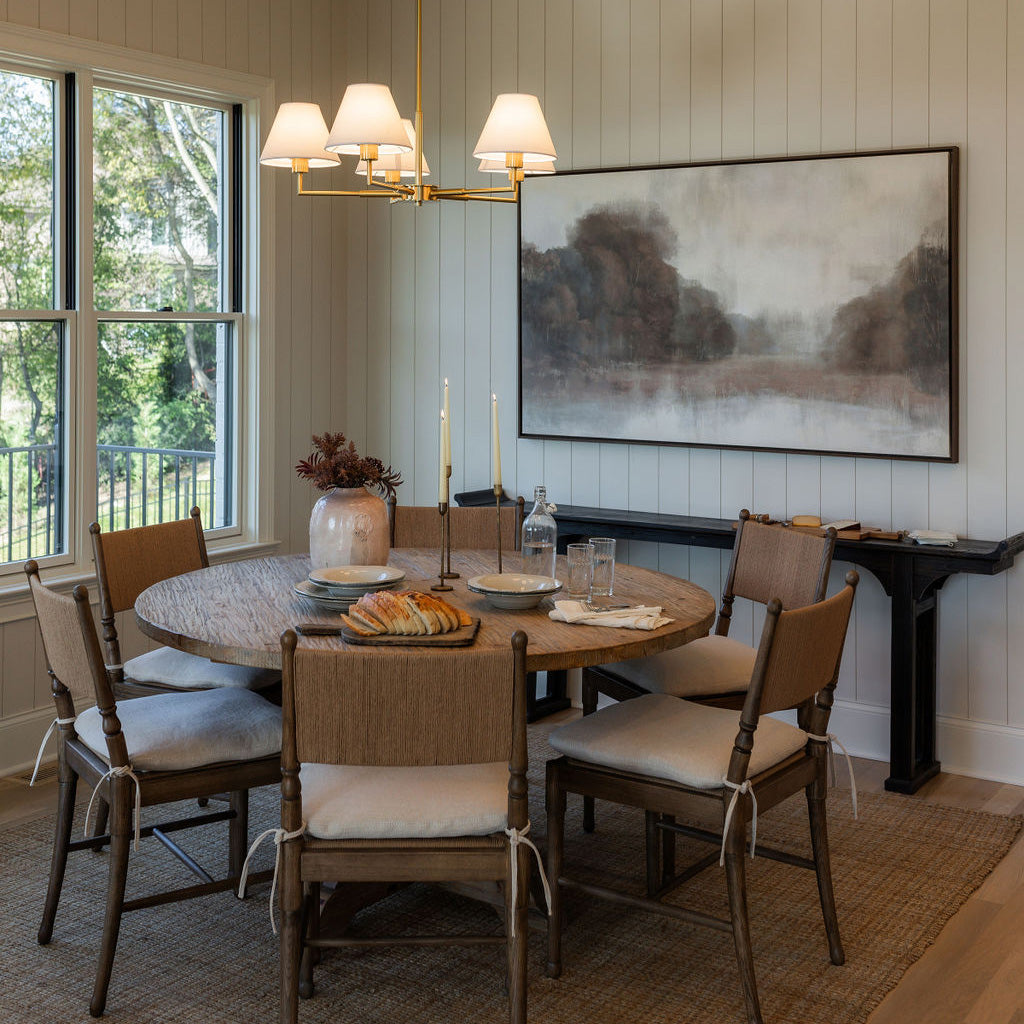
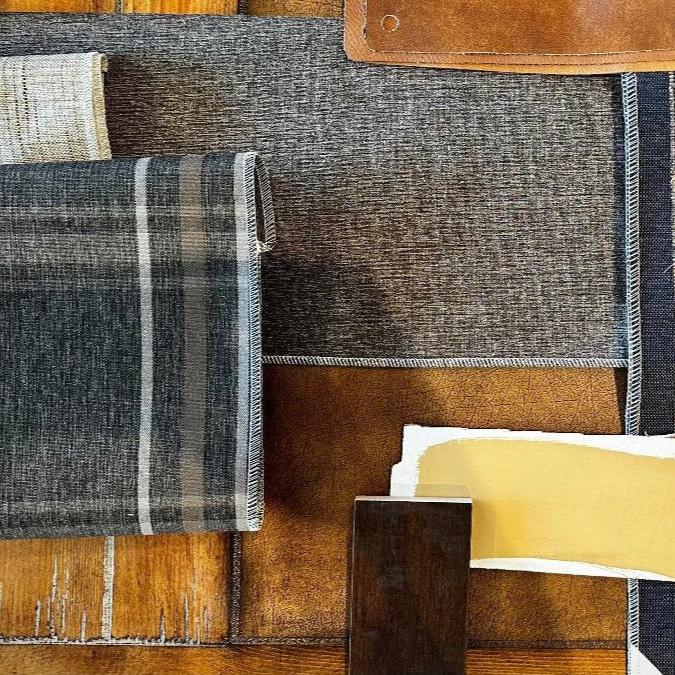
Learn Before You Shop
Heirloom-quality furniture, thoughtfully curated for real life.
Our approach to helping you shop:
- Lifestyle + room scale first (kids/pets, traffic flow, usage).
- Comfort second (seat depth/height, cushion feel, support).
- Construction third (frame, suspension, cushions, finish, hardware).
- Materials and customization last (fabric/leather, wood, finish, configuration).
Browse the questions below to learn about furniture construction, materials, and design—so you can walk into any showroom (especially ours) with confidence.
Browse by Topic
Furniture Knowledge Base
Shopping Basics
What measurements do I need before I shop for furniture?
Bring room dimensions, ceiling height, openings (doors/halls/stairs), and the footprint of existing pieces you’re keeping.
What to Know
- Measure the room (length/width) and note window/door locations and traffic paths.
- Measure your entry path: doorway widths/heights, hall turns, stair width, and any tight landings.
- For sofas/sectionals: note max length, chaise depth, and how much clearance you want around the piece (typically 18–24 inches for main walkways).
- For dining: measure the dining zone and plan 36 inches of clearance behind chairs where possible.
Braden’s Take: Bring room dimensions and a few photos—we’ll help with scale and flag any delivery-path concerns before you fall in love with a piece that won’t fit through the door.
Why is one sofa $2,500 and another $8,500?
Price differences usually come down to the hidden structure: frame, suspension, cushion build, tailoring time, and material quality (fabric/leather).
What to Know
- Frame: kiln-dried hardwood with robust joinery generally outlasts softer woods and stapled joints.
- Suspension: higher-end foundations (e.g., eight-way hand-tied in some makers) are labor-intensive and durable.
- Cushions: higher-resilience foams and better wraps hold shape longer; cheap foam flattens fast.
- Tailoring: pattern matching, hand-cut leather, and detailed trim drive labor hours.
- Warranty + service + replacement parts matter when you plan to keep the piece 10–20 years.
Braden’s Take: We’ll walk you through the construction side by side so you can see and feel what each price point actually buys—no pressure, just clarity.
Brands to explore: Hancock & Moore, King Hickory, Rowe Furniture
How long should good furniture last?
With solid construction and normal use, quality upholstery often lasts 10–20 years; quality wood casegoods can be multi-generational.
What to Know
- Upholstery life is driven by frame, support system, and cushion materials—not just the fabric.
- Wood furniture longevity is driven by joinery, wood movement allowances, and finish quality.
- If you expect to keep it 10+ years, prioritize structure and replaceable/repairable components.
- Ask about warranty coverage for frame, suspension, and mechanisms (especially for motion seating).
Braden’s Take: We focus on brands that build for the long haul. Ask us what’s repairable and what’s replaceable on any piece—that’s the real longevity test.
Brands to explore: Stickley, Stressless / Ekornes
Should I buy in-stock or custom order?
If fit/finish/fabric matters, custom is worth it. If timing is the priority, in-stock or quick-ship is the move.
What to Know
- Custom is best when you need a specific size, configuration, seat depth, or performance fabric/leather.
- In-stock is best when you need it fast and your room can accommodate standard sizes.
- Custom lead times vary by maker and season; plan ahead for whole-room projects.
- If you’re doing custom, order swatches and confirm undertones under your home lighting.
Braden’s Take: We carry both in-stock and custom programs. Tell us your timeline and we’ll show you what’s realistic without rushing you into something that isn’t right.
Brands to explore: Canadel, Rowe Furniture
What should I avoid when buying furniture?
Avoid vague specs, weak seating support, and finishes that don’t match your lifestyle. The fastest regret is the wrong scale or a cushion that collapses.
What to Know
- If you can’t get clear specs (frame, support, cushion build, finish), assume cost was cut in the hidden parts.
- Beware ultra-soft seats with minimal support—great for 5 minutes, then they ‘bottom out’ and lose shape.
- Avoid high-gloss, perfectly smooth tabletops if you want low-maintenance living; they show scratches and rings faster.
- Don’t ignore scale: tape the footprint in your room before ordering.
Braden’s Take: We’ll translate spec sheets into plain English and show you the tradeoffs—comfort, durability, maintenance—before you commit.
What’s the best value furniture for my budget?
Best value means putting dollars into the parts that fail first (frames, support systems, cushions) and choosing a fabric/finish that hides everyday wear.
What to Know
- Prioritize seating construction (frame + support + cushion resilience) over cosmetic upgrades.
- Pick a ‘forgiving’ upholstery/finish (texture + lower sheen) so the piece looks good longer.
- Consider made-to-order when it gets you the exact fabric and cushion feel you need; consider in-stock when timing/value is the priority.
- If you entertain or have kids/pets, spend more on the sofa and dining top surface—those take the most abuse.
Braden’s Take: Tell us how you live—kids, pets, entertaining—and we’ll point you to the pieces where your dollar goes furthest on the parts that matter most.
Sofas & Sectionals
How do I choose the right sectional configuration?
Start with traffic flow, then decide on chaise vs. L-shape vs. U-shape based on how you actually lounge.
What to Know
- Map your primary walkway(s) first—don’t block the natural path from entry to seating to kitchen.
- Choose chaise if you want ‘one best seat’ for lounging; choose U-shape if you host and want face-to-face seating.
- Watch seat depth: deeper seats feel loungey but can be uncomfortable for shorter legs without a pillow plan.
- Confirm left-arm vs right-arm orientation while facing the piece.
Braden’s Take: Bring your floor plan (or let us sketch one). We’ll tape out configurations in the showroom so you can feel the scale before committing.
Brands to explore: King Hickory, Rowe Furniture
What seat depth and seat height should I look for?
Seat height affects ‘ease of getting up.’ Seat depth affects whether you sit upright or lounge.
What to Know
- If you’re tall or you love lounging, you’ll usually prefer deeper seats; if you like upright posture, go shallower.
- Higher seat height can feel better for knees/hips; lower seats can feel more modern but harder to rise from.
- Arm height matters too—especially if you nap on the sofa or use it for reading.
- Try it with shoes off and sit all the way back; you’ll feel quickly whether lumbar support is right.
Braden’s Take: Specs on paper only tell part of the story. We’ll set you up with a few options side by side so you can feel the difference in seat depth, height, and back support.
What’s the difference between eight-way hand-tied and sinuous springs?
Eight-way hand-tied uses individually tied coils; sinuous springs use continuous wire arcs. Both can be good—execution matters.
What to Know
- Eight-way hand-tied is labor-intensive and can deliver durable, even support when done well.
- Sinuous spring systems vary widely; heavier gauge wire and good frame attachment are key.
- The cushion and frame still matter: a great spring system won’t fix low-quality foam or a weak frame.
- If you want the ‘traditional high-end’ foundation, ask which of our lines specify eight-way hand-tied.
Braden’s Take: Ask us to show you the underside—literally. We can point out the differences between spring systems on our showroom pieces so you know what you’re buying.
Brands to explore: Hancock & Moore, King Hickory, Stressless / Ekornes
Why do some sofas feel great in the showroom but sag at home?
Usually it’s foam quality and wrap choice. Low-density foam and cheap fiber wraps compress quickly.
What to Know
- Ask about foam density/resiliency (HR foams hold shape better).
- Down-blend and fiber wraps feel plush but need regular ‘fluffing’ to look tailored.
- Seat depth and posture matter: deep seats with soft cushions can feel like you’re sliding forward.
- A good test: sit in the same spot for 5–10 minutes and see if you bottom out.
Braden’s Take: We’ll have you sit for more than 30 seconds. If a cushion is going to bottom out, we’d rather you discover it in the showroom than at home.
Brands to explore: Hancock & Moore, Smith Brothers of Berne
Fabrics & Performance
What’s the best upholstery fabric for kids and pets?
Look for high durability (double rubs), tight weaves, and stain-resistant performance fabrics; pick texture that won’t snag.
What to Know
- Tight weaves and subtle texture typically outperform loose weaves and delicate loops.
- If you have cats, avoid heavy loops (snag risk) and consider smooth performance fabrics or leather.
- Choose mid-tone, heathered patterns to hide daily life without looking dirty.
- Order swatches: performance varies by fiber content and finish, not just marketing labels.
Braden’s Take: We keep performance fabric samples on hand and can help you compare options that hold up to real life. Order swatches to test at home under your own lighting.
Brands to explore: Rowe Furniture
Leather
What’s the difference between aniline, semi-aniline, and protected leather?
Aniline is the most natural and shows character; protected leathers are more uniform and stain-resistant; semi-aniline sits in the middle.
What to Know
- Aniline: soft, natural, develops patina; shows scratches/spills more easily.
- Protected: most practical for kids/pets; easier to wipe; less ‘raw’ character.
- Semi-aniline: tries to balance softness and practicality.
- Ask how you live first, then choose leather type—don’t pick purely on feel in a showroom.
Braden’s Take: We’ll show you all three types side by side so you can see and feel the difference. Your lifestyle should pick the leather—not the other way around.
Brands to explore: Hancock & Moore, Rowe Furniture
How do I care for leather furniture?
Dust regularly, keep it out of direct sun/heat vents, blot spills quickly, and use the manufacturer-recommended cleaner/conditioner schedule.
What to Know
- Avoid harsh cleaners and oils unless the maker recommends them.
- Rotate cushions (if loose) to even out wear.
- Keep leather 12–18 inches away from heat sources to prevent drying and cracking.
- Expect patina—especially on more natural leathers; it’s part of the appeal.
Braden’s Take: We’ll send you home with the right care recommendations for your specific leather type. Different leathers need different routines—and the right one is simple.
Comfort & Ergonomics
Should I buy a recliner, a stationary chair, or a motion sofa?
If you prioritize posture support and long sit sessions, motion can be a game-changer; if you want a ‘showpiece’ look, stationary often wins.
What to Know
- Motion seating is best for reading/TV and back support; stationary is often cleaner in silhouette.
- Check wall clearance requirements for motion pieces and confirm power access for powered models.
- Try multiple sizes when offered—fit matters as much as feature set.
- Ask about mechanism warranty and serviceability.
Braden’s Take: Come try our Stressless and motion seating options in person—sizing and fit matter more with recliners than almost any other category.
Brands to explore: Stressless / Ekornes, Smith Brothers of Berne
Wood Furniture
Is veneer ‘bad’? What’s the difference between solid wood and veneer?
Veneer isn’t automatically bad—good veneer over a stable substrate can be very durable. The real issue is cheap core materials and poor construction.
What to Know
- Solid wood moves with humidity; well-made pieces allow for that movement.
- Veneer can provide stability and beautiful grain on wide surfaces—if the core and adhesive are quality.
- Avoid: thin veneers over low-grade particleboard edges, especially in high-moisture homes.
- Ask how drawers and joinery are built; that’s often a better quality signal than ‘solid wood’ alone.
Braden’s Take: We’ll show you both in the showroom and explain what’s behind the surface. Good veneer is nothing to apologize for—and we’ll show you why.
Brands to explore: Stickley
What’s the value of quarter-sawn wood (like quarter-sawn oak)?
Quarter-sawing changes grain orientation for stability and a distinctive ray-fleck figure (especially in oak).
What to Know
- Often more stable across seasons (less cupping) compared to plain-sawn boards.
- The grain figure is a major aesthetic—many people buy it specifically for the look.
- Typically costs more due to yield and processing.
- Pair with a finish that lets the grain show; heavy stain can mute the character.
Braden’s Take: Come see our Stickley collection—quarter-sawn white oak is one of their signature looks, and it’s something you really need to see in person to appreciate.
Brands to explore: Stickley
Why do people talk about white oak (and why is it popular)?
White oak is valued for durability, attractive grain, and (often) a more closed pore structure than red oak—making it a strong choice for long-term furniture.
What to Know
- Works well for both traditional and modern looks depending on finish.
- Takes stain and clear finishes differently than other woods; sample boards matter.
- If you want the classic Arts & Crafts vibe, oak (often quarter-sawn) is a signature look.
- Your ‘best’ oak choice depends on style + finish + how much grain you want to see.
Braden’s Take: We carry several lines in white oak. If you’re drawn to the grain, let us show you how different finishes change the character of the same wood.
Brands to explore: Stickley, MAVIN Furniture
Dining
How big should my dining table be?
Plan ~24 inches of table width per person (minimum), and keep 36 inches of clearance behind chairs when possible.
What to Know
- Rectangular tables fit most rooms; round tables are great for conversation and tight spaces.
- If you entertain, consider leaves—but confirm storage and how often you’ll actually use them.
- Chairs vary a lot in footprint; select chairs before you lock table size when possible.
- For families, prioritize durable finishes and comfortable chair ergonomics.
Braden’s Take: Bring your room measurements and how many you seat on a typical night vs. holidays—those are usually different numbers, and we’ll plan for both.
Brands to explore: Canadel, MAVIN Furniture
How do I choose dining chairs that are actually comfortable?
Comfort comes from seat height, seat width, back shape, and how the chair ‘meets’ the table apron.
What to Know
- Make sure your chair seat height works with your table height (and any apron).
- Sit for a few minutes—many dining chairs feel fine for 60 seconds and awful for 45 minutes.
- If you have kids, consider stain-resistant fabrics or easy-clean materials.
- Armchairs at the head of the table look great but take more space; plan for it.
Braden’s Take: Pull up a chair—literally. We’ll set you at a table at the right height and let you sit long enough to feel the difference between ‘looks good’ and ‘feels right.’
Brands to explore: Canadel, MAVIN Furniture
Outdoor
What outdoor furniture materials hold up best in humid or sunny climates?
Powder-coated aluminum, quality resin wicker, and high-grade teak are common ‘long-term’ choices—each with different upkeep.
What to Know
- Powder-coated aluminum: low maintenance; great for humidity and coastal air.
- Resin wicker: good when UV inhibitors are built in; avoid cheap brittle weave.
- Teak: beautiful and durable; will weather to gray unless maintained.
- Cushions: performance outdoor fabrics matter as much as frames; store or cover cushions when possible.
Braden’s Take: We’ll walk you through our Summer Classics and Woodard collections and match the material to your climate, usage, and how much maintenance you actually want to do.
Brands to explore: Summer Classics, Woodard
How do I maintain outdoor furniture so it lasts?
Treat outdoor like a ‘material system’: frame + finish + fabric + storage habits.
What to Know
- Rinse pollen/salt periodically; abrasive dirt is what chews up finishes.
- Use manufacturer-approved cleaners; avoid strong bleach mixes unless specified.
- Store cushions or use breathable covers during long wet seasons.
- Tighten hardware annually and check glides/feet to prevent wobble.
Braden’s Take: We’ll give you a care schedule matched to your specific materials. A few minutes of seasonal maintenance makes a real difference in how long outdoor pieces last.
Interior Design Basics
What size rug do I need for a living room?
In most living rooms, bigger is better: aim for front legs on the rug at minimum; ideally all seating legs on the rug.
What to Know
- Common mistake: a rug that only fits under the coffee table makes the room feel disconnected.
- Use the rug to ‘anchor’ the conversation area and define the space.
- If you’re between sizes, go up—especially in open-plan rooms.
- Choose a rug pad; it improves feel and extends rug life.
Braden’s Take: Bring your room dimensions—we’ll help you figure out the right rug size before you buy. An undersized rug is the most common (and most easily avoided) decorating mistake.
Can I mix wood tones and finishes in the same room?
Yes—mixing is often what makes a room feel collected. The trick is to repeat undertones and balance contrast.
What to Know
- Pick a dominant wood tone and let others support it (don’t make every piece compete).
- Repeat undertones (warm vs cool) across at least 2–3 elements in the room.
- Use a ‘bridge’ material (rugs, textiles, metal finishes) to blend tones.
- If a room feels busy, simplify silhouettes before you simplify finishes.
Braden’s Take: Our design team loves mixing wood tones—and we’ll show you how to do it confidently. Bring photos of your space and we’ll help build a palette that feels collected, not chaotic.
How should I lay out a living room around a TV without it feeling like a media cave?
Treat the TV wall as one ‘zone’ and build a comfortable conversation zone that doesn’t require everyone to stare at the screen.
What to Know
- Start with the main sightlines and traffic paths; don’t block the primary walkway.
- Keep seating within a comfortable viewing distance for your screen size.
- Use accent chairs to create a conversational angle rather than a straight line of seats.
- Layer lighting (ambient + task + accent) so the room works when the TV is off.
Braden’s Take: Bring your floor plan and TV wall dimensions. We’ll help you create a layout that works for movie night and conversation—without one killing the other.
How do I pick a style that won’t feel dated?
Anchor the room with timeless shapes and materials, then add trend through layers you can swap (pillows, art, lighting, accessories).
What to Know
- Spend on the ‘core’: sofa/sectional, primary casegoods, dining table—keep silhouettes clean and well-proportioned.
- Use trends in low-commitment items: textiles, art, decor, and accent lighting.
- A cohesive palette and consistent scale reads timeless even when styles are mixed.
- Choose materials that age well: real wood, quality leather (if it suits your home), and fabrics that clean easily.
Braden’s Take: We’ll help you invest in the pieces that anchor the room and keep the trend pieces swappable. That’s the formula for a room that ages well.
How do I choose a color palette for a room?
Start with what can’t change (floors/cabinets), choose a main neutral, add 1–2 supporting colors, and keep bold color as an accent.
What to Know
- Build from fixed elements: floors, large rugs, existing art, wood tones.
- Repeat colors 2–3 times across the room for cohesion (textiles, art, decor).
- Test swatches in your actual lighting—day vs night can change everything.
- If you want flexibility, keep the strongest color in pillows/art rather than on the sofa.
Braden’s Take: Bring photos of your room—including floors, cabinets, and anything that’s staying. Our team will help you build a palette that works in both daylight and evening.
How high should I hang curtains and art?
Curtains typically look best hung higher than the window frame; art should be visually connected to the furniture beneath it—use tape to mock it up first.
What to Know
- Higher curtain placement can make ceilings feel taller and windows feel larger.
- Art should relate to the furniture below so it doesn’t ‘float’ awkwardly.
- Mock up with painter’s tape before drilling—small shifts make a big difference.
- Keep consistency across the room (don’t mix random hanging heights).
Braden’s Take: These finishing touches make a room feel intentional. If you’re second-guessing placement, our design team can help with proportion and positioning.
What lighting do I actually need in a room?
Aim for layers: ambient (overall), task (functional), and accent (mood). One overhead light rarely makes a room feel finished.
What to Know
- Ambient: ceiling fixture or recessed lighting for general illumination.
- Task: reading lamps, desk lights, under-cabinet lighting where work happens.
- Accent: picture lights, sconces, or directional lamps to add depth and warmth.
- Use dimmers where possible—control is what makes lighting feel ‘designed.’
Braden’s Take: Good lighting is the most underrated room upgrade. If your space feels ‘off’ and you can’t figure out why, it’s usually the lighting—and the fix is often simpler than you think.
How do I make a room feel ‘finished’?
Get the big pieces right (scale + layout), then add a few intentional layers: rug, lighting, art, window treatments, and texture.
What to Know
- Correct scale/layout first—no amount of decor fixes a crowded or floating room.
- Use a properly sized rug to anchor the zone.
- Add lighting layers (ambient/task/accent).
- Finish with art + window treatments + a few larger accessories (not many small ones).
Braden’s Take: If your room feels 80% done and stuck, bring us photos. The last 20% is usually rug, lighting, and a few intentional layers—and those are the decisions we love helping with.
Delivery & Service
What should I expect on delivery day for large furniture?
Plan for access, protect the path, and verify placement before the crew leaves.
What to Know
- Clear the entry path and remove fragile items (frames, lamps, decor).
- Confirm doorway and hallway widths ahead of time; tight turns matter.
- Inspect upholstery/leather and wood surfaces at delivery for any shipping damage.
- Keep documentation and warranty info; it speeds up service if you ever need it.
Braden’s Take: We’ll walk you through what to expect before delivery day. Clear the path, know the timeline, and our team handles the heavy lifting.
What warranties actually matter for furniture?
Focus on frame, suspension, and mechanisms. Fabrics/leathers and finishes are often more limited and tied to care requirements.
What to Know
- Frame warranty: indicates confidence in structure.
- Suspension/mechanism warranty: critical for motion pieces and long-term comfort.
- Know what’s ‘normal wear’ vs covered defects; most brands exclude misuse and improper cleaning.
- Ask how service is handled: parts availability and local repair options are part of value.
Braden’s Take: We’ll break down what each brand covers and for how long. A warranty tells you a lot about how confident a maker is in their own product.
Brands to explore: Stressless / Ekornes, Woodard
Why are lead times so long on some furniture?
Many of the best pieces are made-to-order: you’re choosing the exact leather/fabric, finish, and sometimes cushion feel—production scheduling drives lead time more than shipping.
What to Know
- Customization usually means the piece is built after your selections are finalized.
- Quick-ship is often tied to specific fabrics/finishes that are stocked.
- Ask what can change timing (material availability, finishing, shipping windows).
- If a deadline matters, we can propose in-stock or faster-program alternatives.
Braden’s Take: We’ll quote lead-time ranges and show you which selections speed things up or slow them down.
Can I return custom furniture? What about in-stock?
Custom furniture is typically final sale because it’s built to your selections; in-stock items are often more flexible. Always confirm the specific policy before ordering.
What to Know
- Made-to-order upholstery and custom finishes are usually non-returnable due to personalization.
- In-stock items may allow returns/exchanges within a window (with condition and delivery terms).
- Plan on samples and approval steps (leather/fabric swatches) to avoid surprises.
- If you’re unsure, we can steer you toward options with more flexibility.
Braden’s Take: We’ll make sure you’re confident before you order. For custom pieces, that means swatches, samples, and approval steps so there are no surprises.
What happens if something arrives damaged?
Document it quickly (photos), report it promptly, and we coordinate repair, replacement parts, or exchange depending on the issue.
What to Know
- Inspect at delivery when possible; take clear photos of any issues.
- Report promptly—timing matters for claims and manufacturer authorization.
- Many finish issues are repairable; structural issues may require parts or replacement.
- We’ll manage the manufacturer process so you’re not stuck chasing paperwork.
Braden’s Take: We handle the manufacturer claim process from start to finish. Take photos at delivery, let us know, and we’ll manage the rest so you don’t have to.
Mattress & Sleep
How do I choose the right mattress?
Match to sleep position, pressure points, temperature, and partner needs—then test it in your real sleep positions for several minutes.
What to Know
- Side sleepers typically need more pressure relief at shoulders/hips; stomach sleepers usually need firmer support; back sleepers need balanced support.
- If you sleep hot, prioritize breathability and ask about heat retention characteristics.
- Couples should consider motion isolation and edge support.
- Test properly: lie down in your normal positions (not just a quick sit).
Braden’s Take: If you want, we can treat ‘sleep’ like a system: surface + environment + ritual—so you’re not just swapping a mattress.
How long should a mattress last?
It depends on materials and use. Comfort layers change first—if sleep quality drops, you wake up sore, or there’s visible sag, it’s time to reassess.
What to Know
- Support and comfort layers degrade differently; comfort changes often show up first.
- Use proper foundation support and a quality protector to extend life.
- Rotation (if recommended) helps even out wear.
- Your body is the indicator: new aches or poor sleep can signal loss of support.
Braden’s Take: If you’re waking up stiff or your mattress has visible impressions, come talk to us. We’ll help you figure out whether it’s the mattress, the foundation, or both.
Still have questions?
Our team is here to help. Reach out and we’ll guide you through your options.

Est in 1956
With nearly seven decades of experience, we’ve built our name on craftsmanship, care, and a deep understanding of what makes a house feel like home.

Designed for Life
We choose every piece for its lasting quality, timeless style, and ability to bring comfort and character to everyday living.

People first, always
From the way we design to the way we serve, we put people at the heart of everything we do.