

Heirloom Wood Furniture Guide
Joinery, materials, and what to look for when investing in wood furniture built to last generations.
Beyond ‘Solid Wood’
‘Solid wood’ is a starting point, not a quality guarantee. This guide teaches you how to evaluate wood furniture the way a builder would—by looking at joinery, wood movement, drawer construction, and finish quality. These are the details that separate a piece you’ll keep for decades from one you’ll replace in five years.
Use the tabs below to learn what to look for, then explore our recommended brands at the bottom.
What to Look For
The Details That Matter
Wood is a living material. Even after it’s been milled, dried, and finished, solid wood expands and contracts with changes in humidity. This isn’t a defect—it’s physics. The question is whether the builder planned for it.
What good builders do:
- Use kiln-dried hardwood to reduce moisture content before construction. This minimizes (but doesn’t eliminate) seasonal movement.
- Design joints and panels that allow wood to move without cracking or warping. For example, a solid-wood tabletop is typically attached to the base with hardware that allows cross-grain expansion.
- Choose wood species that are inherently more stable. Quarter-sawn boards, for instance, move less across seasons than plain-sawn boards.
Red flags: If a large solid-wood surface is rigidly glued or screwed with no allowance for movement, it’s likely to crack, split, or warp over time—especially in Tennessee’s humid summers and dry winter heating seasons.
Key Takeaway: Ask “How does this piece handle seasonal wood movement?” It’s one of the best quality questions you can ask.
Ask us: We’ll explain how each maker addresses wood movement in their construction.
Joinery is where craftsmanship shows. How pieces of wood are connected determines whether furniture holds up for 5 years or 50.
The joints to know:
- Mortise-and-tenon: A projecting piece (tenon) fits into a hole (mortise) for a strong mechanical lock. This is the gold standard for structural joints in quality casegoods. Stickley calls it out as a hallmark of their builds.
- Dovetail: Interlocking fan-shaped cuts that resist pulling apart. The classic sign of quality drawer construction. Look for dovetails on drawer fronts and backs.
- Corner blocks: Triangular reinforcements at stress points (where legs meet rails, for example). Not glamorous, but they prevent wobble and racking over time.
What to avoid: Furniture held together primarily by staples, nails, or glue alone. These joints loosen with use. Butt joints (flat edge to flat edge) without mechanical reinforcement are the weakest option.
Key Takeaway: Check the high-stress joints. If you can see dovetails and feel solid joints, you’re in the right territory.
Ask us: “What joinery is used on the high-stress joints of this piece?”
Veneer isn’t automatically bad. In fact, on large flat surfaces like tabletops and dresser tops, quality veneer over a stable substrate can actually be more stable than solid wood—because it’s less prone to warping.
When veneer is a feature:
- Wide surfaces (dining tables, large dressers) benefit from veneer’s dimensional stability.
- Veneer allows bookmatched grain patterns that aren’t possible with solid wood.
- Quality veneer uses thick slices of real wood over a stable core like MDF or plywood.
When veneer is a problem:
- Thin veneers over low-grade particleboard—especially on edges—chip and peel quickly.
- Poor adhesive and substrate in high-moisture environments lead to delamination.
- If you can’t sand and refinish the surface, its lifespan is limited.
Key Takeaway: Don’t ask “Is this solid wood?”—ask how the drawers and joinery are built. That tells you more about overall quality.
Ask us: “What’s the substrate under this veneer, and how thick is the veneer layer?”
Drawers are the highest-use component in most casegoods. They’re opened and closed thousands of times over the life of a piece. Construction quality here directly impacts your daily experience.
Drawer box construction:
- Look for solid-wood drawer boxes with dovetail joinery. This is the standard in heirloom-quality furniture.
- Drawer bottoms should be solid wood or quality plywood captured in a groove (not stapled on from below).
- Avoid thin hardboard or flimsy MDF drawer bottoms—they sag and fail over time.
Slide types:
- Full-extension slides: Let you access the entire drawer. Ball-bearing slides are smooth and durable.
- Under-mount slides: Hidden beneath the drawer box for a clean look. Higher-end but more expensive.
- Wood-on-wood slides: Traditional, found on some classic builds. Smooth when well-fitted but can stick in humid conditions.
Key Takeaway: The one-hand test: open the drawer with one hand. It should glide smoothly, stay on track, and close firmly.
Ask us: “What slide hardware does this piece use, and what’s the drawer box made of?”
A good finish protects the wood and sets the tone for maintenance. It’s also the part of the piece you interact with every day, so durability and repairability matter.
What to look for:
- Catalyzed finishes: Chemical-cured finishes that are highly durable and resistant to water rings and scratches. Common on higher-end production furniture.
- Lacquer: Traditional, repairable, and can be re-coated. Softer than catalyzed finishes but easier to touch up.
- Oil finishes: Beautiful and natural-feeling, but require more maintenance. Best for people who enjoy the upkeep process.
Finish strategy for families: If you have kids, choose a lower-sheen, textured finish over high-gloss. A satin or matte finish hides daily wear much better.
Repairability: Ask whether the finish can be touched up or refinished. Heirloom pieces from brands like Stickley and MAVIN are built to be refinished when needed—extending their life by decades.
Key Takeaway: Choose a finish that matches your lifestyle, not just one that looks best in the showroom.
Ask us: “What finish is on this piece, and how do I maintain it?” We’ll give you a care plan that matches the finish type.
Craftsmanship You Can See and Feel
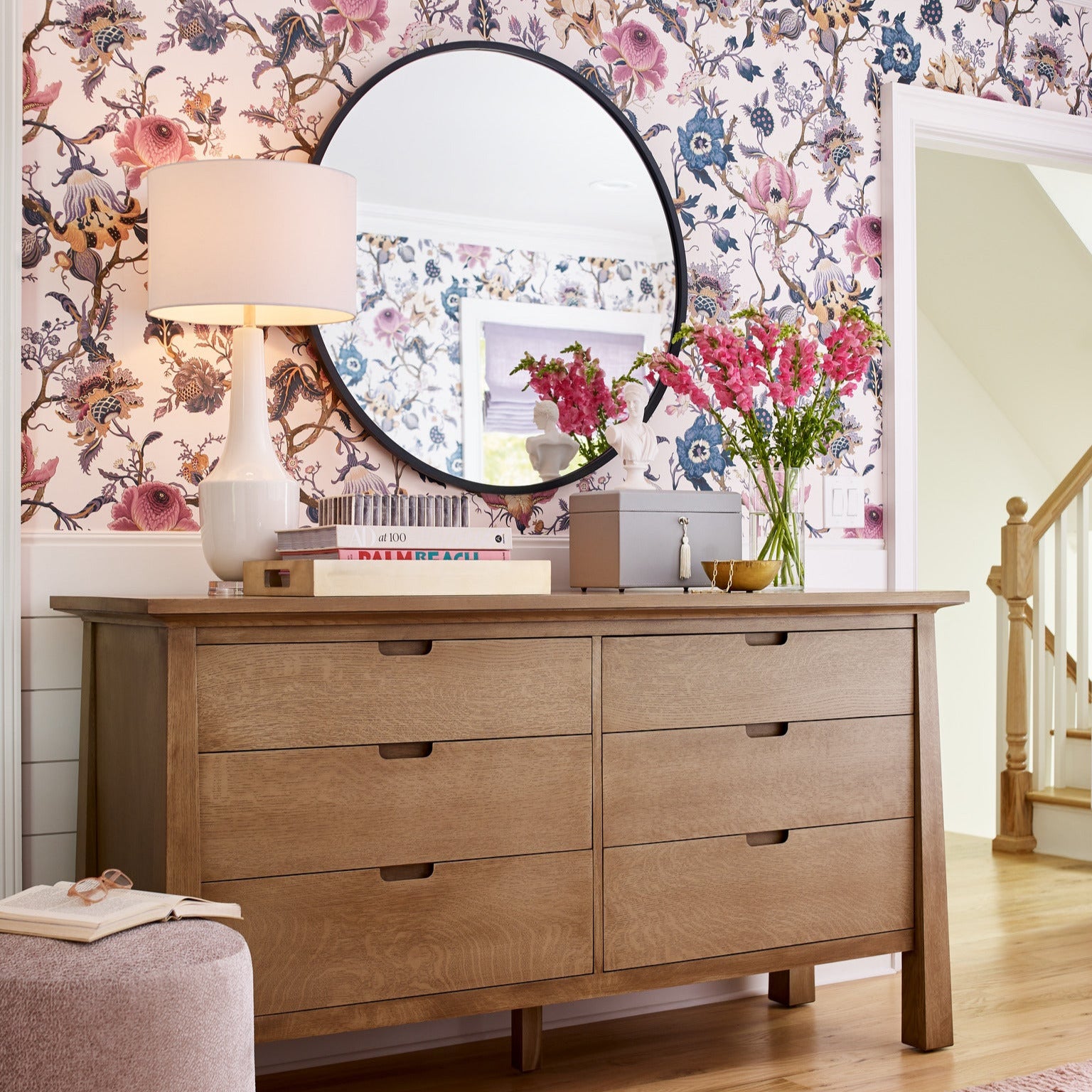
The difference between furniture that lasts five years and furniture that lasts fifty is in the details you can’t see in a photo.
Pull out a drawer, run your hand along a dovetail joint, compare finishes under natural light. The quality differences this guide describes are things you can see and feel in person at our showroom.
Our Picks
Brands to Explore
Stickley
Heirloom-grade American woodworking and classic design. Mortise-and-tenon joinery on casegoods, dovetail drawer fronts, and many pieces made in Manlius, New York. If you want ‘heirloom’ casegoods, start here.
Best for: heirloom wood furniture, classic American design, buyers who care about joinery.
Shop StickleyMAVIN Furniture
American-made solid wood—from lumber to finished furniture. Located in Ohio’s Amish country with a ‘forest to fabrication’ story: they harvest timber, mill lumber, and dry in their own kilns. Unusually transparent about the supply chain.
Best for: solid wood dining and bedroom, buyers who want domestic material provenance.
Shop MAVINJonathan Charles
Artisan techniques like hand carving and hand-cut marquetry with antique-reproduction roots. For ‘jewelry pieces’—console tables, cabinets, and accents with artisan detail.
Best for: accent casegoods, statement pieces, antique-reproduction-inspired designs.
Explore Jonathan CharlesCanadel
Custom dining program (UDesign) with birch-based construction and broad finish options. If you want the dining set to fit the room (not the other way around), Canadel’s custom program is hard to beat.
Best for: custom dining tables and chairs, finish-matching across a dining set, families who need durable dining.
Shop CanadelIs veneer ‘bad’? What’s the difference between solid wood and veneer?
Veneer isn’t automatically bad—good veneer over a stable substrate can be very durable. The real issue is cheap core materials and poor construction.
What to Know
- Solid wood moves with humidity; well-made pieces allow for that movement.
- Veneer can provide stability and beautiful grain on wide surfaces—if the core and adhesive are quality.
- Avoid: thin veneers over low-grade particleboard edges, especially in high-moisture homes.
- Ask how drawers and joinery are built; that’s often a better quality signal than ‘solid wood’ alone.
Braden’s Take: We’ll show you the difference between quality veneer and cheap veneer in person—pull out a drawer, look at the substrate, and feel the edge banding. That tells you more than any label.
Brands to explore: Stickley
What’s the value of quarter-sawn wood (like quarter-sawn oak)?
Quarter-sawing changes grain orientation for stability and a distinctive ray-fleck figure (especially in oak).
What to Know
- Often more stable across seasons (less cupping) compared to plain-sawn boards.
- The grain figure is a major aesthetic—many people buy it specifically for the look.
- Typically costs more due to yield and processing.
- Pair with a finish that lets the grain show; heavy stain can mute the character.
Braden’s Take: Ask us to show you quarter-sawn oak next to plain-sawn. The ray-fleck pattern is one of those things you either love or don’t—and seeing it in person settles it instantly.
Why do people talk about white oak (and why is it popular)?
White oak is valued for durability, attractive grain, and (often) a more closed pore structure than red oak—making it a strong choice for long-term furniture.
What to Know
- Works well for both traditional and modern looks depending on finish.
- Takes stain and clear finishes differently than other woods; sample boards matter.
- If you want the classic Arts & Crafts vibe, oak (often quarter-sawn) is a signature look.
- Your ‘best’ oak choice depends on style + finish + how much grain you want to see.
Braden’s Take: We carry Stickley and MAVIN in both oak and other species. Come see how different finishes—from natural to dark stain—change the personality of the same wood.
Ready to See the Craftsmanship?
Pull out a drawer, run your hand along a dovetail joint, compare finishes under natural light. The quality differences this guide describes are things you can see and feel in person at our Knoxville or Maryville showroom.

Est in 1956
With nearly seven decades of experience, we’ve built our name on craftsmanship, care, and a deep understanding of what makes a house feel like home.

Designed for Life
We choose every piece for its lasting quality, timeless style, and ability to bring comfort and character to everyday living.

People first, always
From the way we design to the way we serve, we put people at the heart of everything we do.