

Dining Room Planning Guide
Table shapes, clearances, and chair comfort—everything you need to design a dining set that fits your room and how you entertain.
Dining Done Right
A dining set isn’t just a table and chairs—it’s the center of daily life, family meals, and entertaining. This guide walks you through room measurements, table shape and size, chair comfort, finish strategy, and when customization makes the difference.
Use the tabs below to plan your dining room step by step, then explore our recommended brands at the bottom.
Step by Step
Planning Your Dining Room
Start with the room, not the table. The most common dining room mistake is buying a table that’s too large (or too small) for the space. A few key measurements prevent that.
Your measurement checklist:
- Room dimensions: Measure the full length and width of your dining area. Note any architectural features (doorways, windows, built-ins, light fixtures) that affect placement.
- Chair clearance: Plan for 36 inches of clearance behind chairs where possible. This lets people push back and stand up without hitting the wall or a sideboard.
- Traffic paths: If your dining room is also a throughway to the kitchen or living room, keep at least 36 inches clear for traffic flow behind active seating.
- Overhead lighting: If you have a chandelier or pendant, note its position—your table should center under it, which may constrain placement.
For open-concept spaces, think about where the ‘dining zone’ begins and ends. A rug can help define the area visually.
Key Takeaway: 36 inches behind chairs is the magic number. It’s the most overlooked measurement and the biggest cause of regret.
Braden’s tip: Bring room dimensions and a few photos when you visit. We’ll help you determine the ideal table size before you fall in love with something that doesn’t fit. Schedule a consultation.
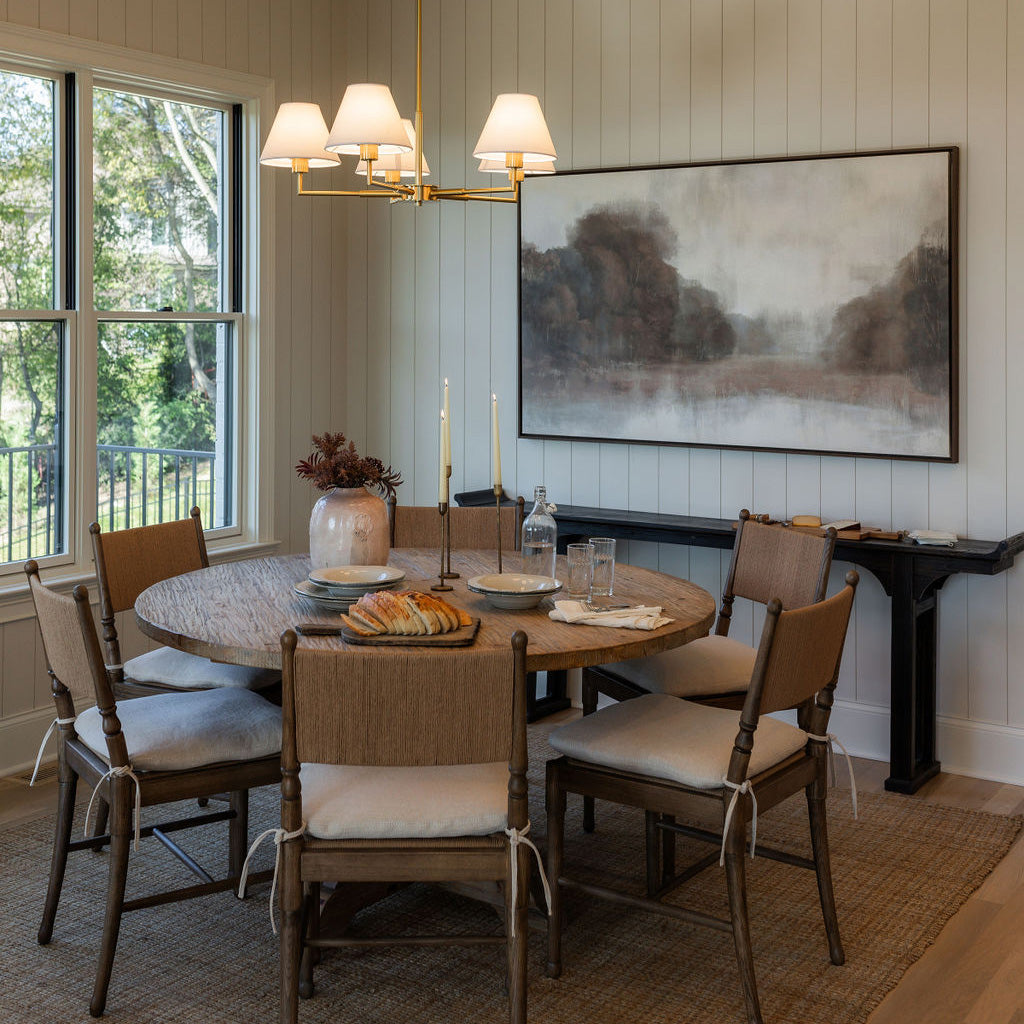
Shape affects both function and room feel. There’s no single ‘best’ shape—it depends on your room, how many people you seat regularly, and how you use the table.
- Rectangular: Fits most rooms and handles the widest range of seating counts. Best for longer, narrower spaces and formal entertaining.
- Round: Great for conversation—everyone faces each other. Works well in smaller or square rooms. Round tables are harder to extend with leaves.
- Oval: Combines the conversational benefits of round with the seating capacity of rectangular. Softens the room visually.
Sizing guidelines:
- Plan ~24 inches of table width per person as a comfortable minimum.
- Chairs vary a lot in footprint—select chairs before you lock table size when possible.
- If you entertain, consider extension leaves. Confirm where you’ll store them and how often you’ll realistically use them.
Key Takeaway: Select chairs before locking table size—chair footprints vary more than you’d expect.
Ask us: “Given my room size and how we eat, what table shape and dimension range should I be looking at?”
Dining chairs get tested every single meal. Comfort comes from seat height, seat width, back shape, and how the chair ‘meets’ the table apron. Don’t skip the in-store sit test.
What to check:
- Seat height vs. table height: Make sure your chair seat height works with your table height (and any apron beneath the tabletop). Armchairs need to clear the apron to tuck under.
- Sit for a few minutes: Many dining chairs feel fine for 60 seconds and awful for 45 minutes. Test them at an actual table, not just standing in the aisle.
- Back support: A slight recline in the chair back makes long meals more comfortable. Straight-back chairs look great but can feel tiring for extended dinners.
- Armchairs: Armchairs at the heads of the table look great and add comfort, but they take more space. Plan for it in your clearance calculations.
For families with kids, consider stain-resistant fabrics or easy-clean seat materials. Upholstered seats add comfort; wood seats are easier to clean.
Key Takeaway: Test chairs for 5+ minutes at a table—not standing in an aisle. What feels fine for 60 seconds can be miserable for dinner.
Ask us: “Can I try these chairs at a table close to my dining table’s height?” We’ll set up a realistic test.
Your dining table surface takes more daily abuse than almost any other piece of furniture. Choose a finish that matches how you actually live.
For families and everyday use:
- Choose a lower-sheen, textured finish (satin or matte). High-gloss surfaces show every fingerprint, water ring, and scratch.
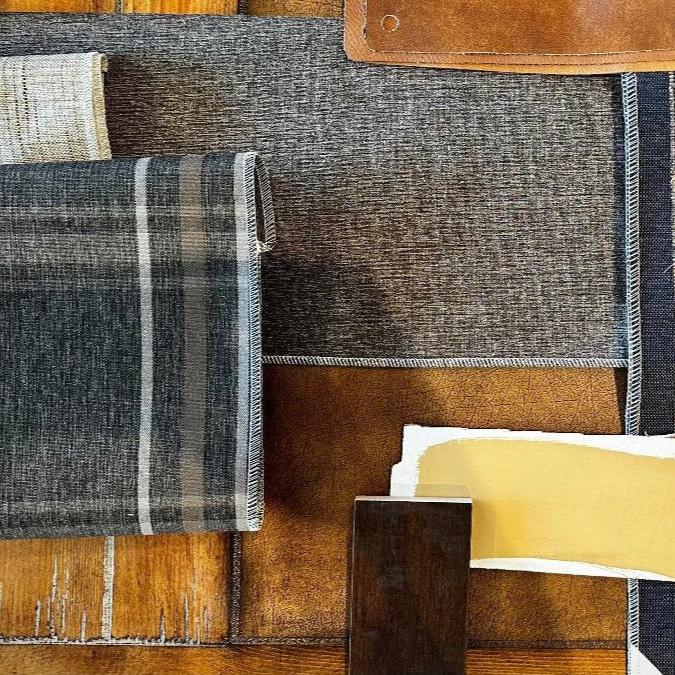
- Catalyzed finishes offer the strongest protection against water, heat, and scratches—ideal for busy households.
- Darker or mid-tone finishes tend to hide wear better than very light or very dark extremes.
For formal dining:
- If the table is used primarily for special occasions, you have more flexibility with finish and color.
- Higher-sheen finishes can look stunning on formal tables but require more maintenance.
Wood species matters too:
- Harder woods (maple, oak, cherry) resist dents better than softer species.
- Test finish samples under your home lighting—colors shift between showroom and home.
Key Takeaway: For daily use, choose a satin or matte catalyzed finish. It’s the most forgiving combination for families.
Ask us: “What finish is most durable for a family dining table that sees daily use?”
When standard sizes and finishes don’t fit your room, custom solves the problem. Our dining brands offer some of the strongest customization programs in the industry.
What you can typically customize:
- Table size: Adjust length, width, and height to fit your room’s exact dimensions.
- Finish: Match or coordinate across tables, chairs, buffets, and other dining pieces.
- Shape and edge profile: Rounded corners for kid-friendly spaces, specific edge details for your style.
- Chair options: Fabric selection, seat style, arm style, and sometimes custom heights.
Our custom dining picks:
- Canadel — Their UDesign program lets you customize dimensions, finishes, chair styles, and more.
- MAVIN — American-made solid wood with domestic material provenance.
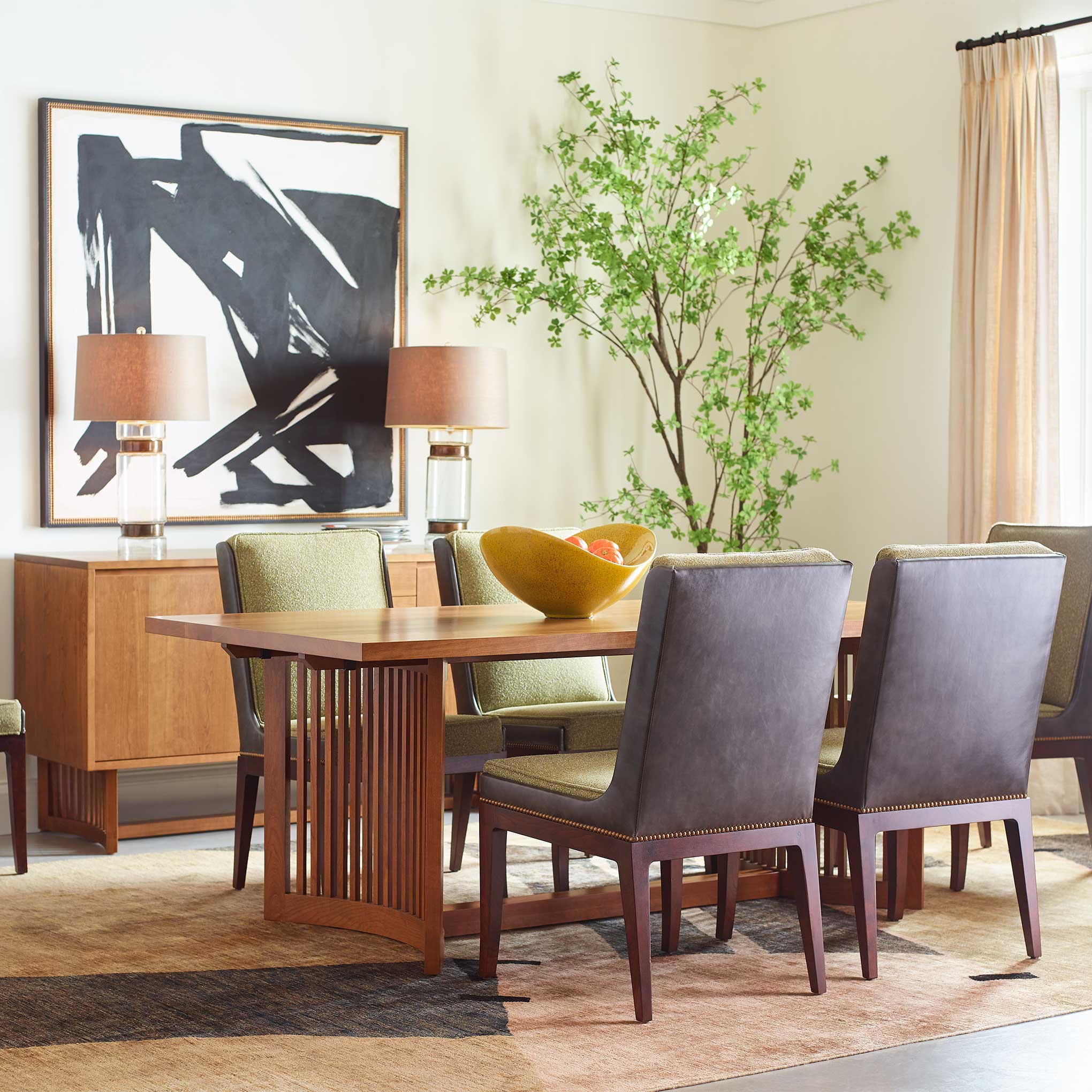
- Stickley — Heirloom-grade joinery and classic American design.
Key Takeaway: If standard sizes don’t fit your room, don’t compromise. Custom dining programs exist for exactly this situation.
Ask us: “I need a table that’s [specific size] with [specific finish]—can we custom order that?” The answer is usually yes.
Where Families Gather
A great dining room isn’t about the table—it’s about the meals, conversations, and memories that happen around it.
With custom programs from Canadel, MAVIN, and Stickley, we can match table size, shape, finish, and chairs to exactly how your family eats and entertains.
Our Picks
Brands to Explore
Canadel
Custom dining program (UDesign) with birch-based construction and broad finish options. If you want the dining set to fit the room (not the other way around), Canadel’s custom program is hard to beat.
Best for: custom dining tables and chairs, finish-matching across a dining set, families who need durable dining.
Shop CanadelMAVIN Furniture
American-made solid wood—from lumber to finished furniture. Located in Ohio’s Amish country with a ‘forest to fabrication’ story. If you care where the wood comes from, MAVIN is unusually transparent about the supply chain.
Best for: solid wood dining and bedroom, buyers who want domestic material provenance.
Shop MAVIN
Stickley
Heirloom-grade American woodworking and classic design. Mortise-and-tenon joinery, dovetail drawer fronts, and a legacy of craftsmanship. Start here if joinery and longevity are your priorities.
Best for: heirloom wood furniture, classic American design, buyers who care about joinery.
Shop StickleyHow big should my dining table be?
Plan ~24 inches of table width per person (minimum), and keep 36 inches of clearance behind chairs when possible.
What to Know
- Rectangular tables fit most rooms; round tables are great for conversation and tight spaces.
- If you entertain, consider leaves—but confirm storage and how often you’ll actually use them.
- Chairs vary a lot in footprint; select chairs before you lock table size when possible.
- For families, prioritize durable finishes and comfortable chair ergonomics.
Braden’s Take: Bring your room dimensions when you visit. We’ll lay out the right table size range in minutes and save you the most common mistake—buying a table that doesn’t leave enough room for chairs to push back comfortably.
Brands to explore: Canadel, MAVIN Furniture
How do I protect my dining table from daily use?
A combination of the right finish and simple habits will keep your table looking great for years.
What to Know
- Catalyzed finishes are the most resistant to water rings, heat marks, and scratches—ideal for families.
- Use trivets and coasters consistently, especially on lacquer and oil finishes which are more vulnerable to heat and moisture.
- Wipe up spills promptly; standing liquid is what causes most finish damage.
- Felt pads under plates, bowls, and centerpieces prevent micro-scratches that dull the surface over time.
Braden’s Take: We’ll match you with a finish that fits your family’s real habits—not the finish that looks best under showroom lighting. Ask about our finish samples to test at home.
Do my dining chairs and table need to come from the same brand?
No—mixing brands can work well, but there are a few things to check first.
What to Know
- Seat height and table apron height must be compatible. Armchairs need clearance to slide under the apron.
- Finish matching across brands is tricky. Complementary tones (not exact matches) often look more intentional than forced matches.
- If you want an exact finish match across table, chairs, and buffet, a single-brand custom program like Canadel UDesign or MAVIN is the simplest path.
- Mixing chair styles (e.g., upholstered heads with wood sides) adds visual interest and is a design move we encourage.
Braden’s Take: Bring a photo of your table (or tell us what you’re considering) and we’ll pull chairs that work in height, scale, and style—across brands if needed.
Ready to Plan Your Dining Room?
Bring your room measurements and we’ll help you find the right table size, shape, and chair combination. With Canadel, MAVIN, and Stickley custom programs, we can dial in exactly what your space needs.

Est in 1956
With nearly seven decades of experience, we’ve built our name on craftsmanship, care, and a deep understanding of what makes a house feel like home.

Designed for Life
We choose every piece for its lasting quality, timeless style, and ability to bring comfort and character to everyday living.

People first, always
From the way we design to the way we serve, we put people at the heart of everything we do.