

Built to Last: Inside the Making of the Park Slope Bed
The Craft Behind the Piece
At Braden's, "built to last" isn't a tagline. It's a standard we hold every piece to before we put our name beside it. Nothing illustrates that better than a bed built the slow way — so we took a minute in the Stickley workshop to show you exactly how the Park Slope comes together.
The Standard: American-Made Since 1900
Stickley has been building furniture in New York for more than a century, and the company helped define American Arts & Crafts design itself. Every Park Slope bed starts with solid hardwood — never veneer over particleboard — cut, joined, and finished by hand. The wood is chosen for grain and stability, the joinery is engineered to survive decades of daily use, and the finish is applied in thin, hand-rubbed coats that let the timber's natural figure show through.
It's the same idea we've built our own name on for nearly seventy years: make it once, and make it right.
The Design: Where Mid-Century Meets the Craftsman Tradition
The Park Slope takes the honesty of Arts & Crafts furniture and lightens it with a mid-century eye. Its signature is a wraparound headboard — a composition of reverse-tapered columns, square spindles, and a sculptural cap rail that gently embraces the bed. A raised cantilever base lifts the whole frame, leaving an airy line of space all the way around, so a substantial piece reads as quiet and grounded rather than heavy.
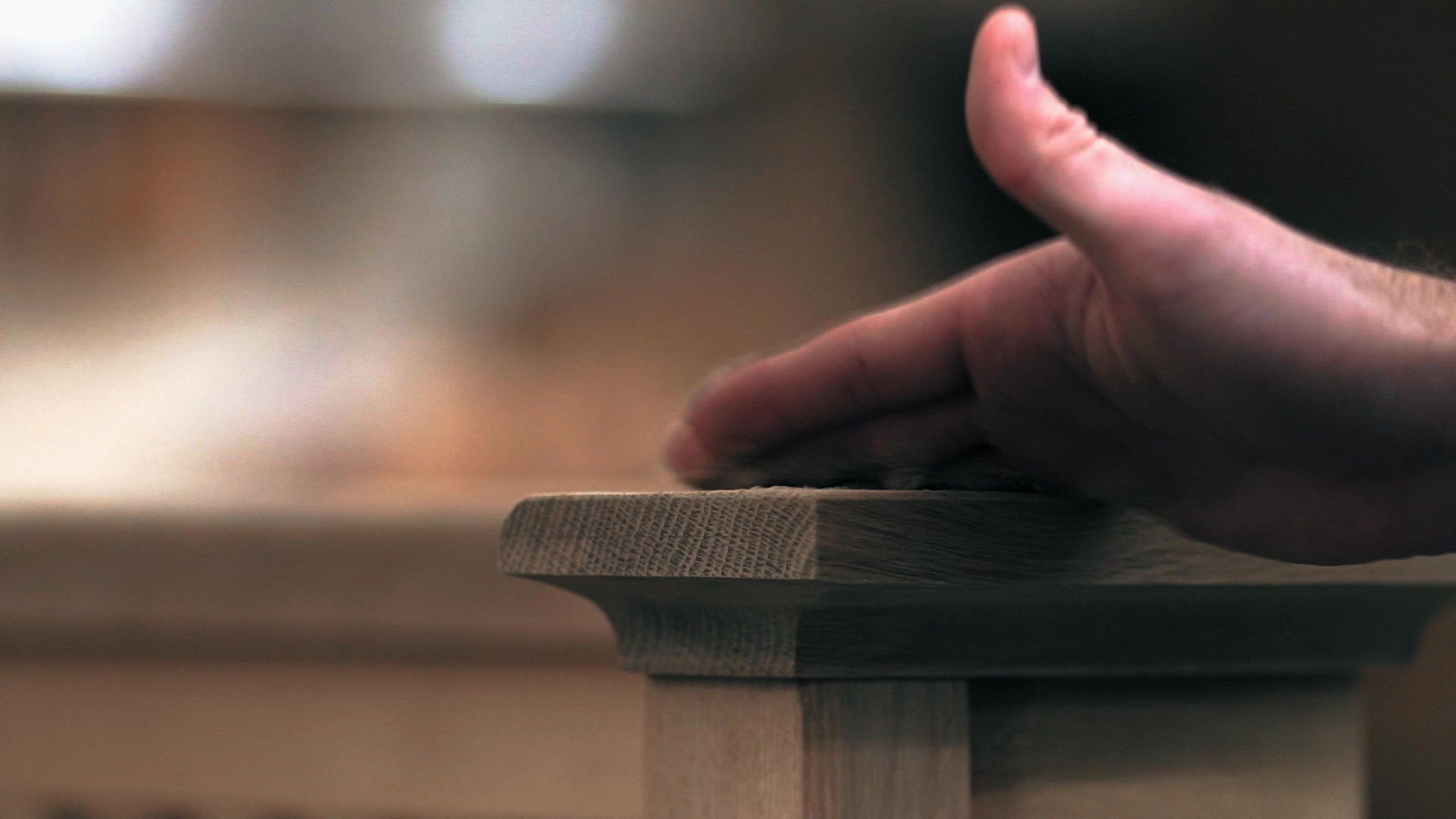
It's offered in solid quartersawn oak or cherry. Quartersawn oak is prized for the dramatic ray-fleck figure that only appears when the log is cut on the quarter — a hallmark of true Craftsman furniture, and a detail you can run your hand across in the video above.
The Detail That Matters: Bed Rail Construction
A bed lives or dies by its rails. It's the part you never see and feel every single night — and it's where shortcuts show up first, as the creak and sway of a frame that's working itself loose. The Park Slope is engineered so that never happens.
|
How a Stickley Bed Is Joined The end rails are mortised and tenoned directly into the posts and locked with wood pins — the same time-tested joint that holds a hundred-year-old table together. The side rails lock into a special iron casting. Two panhead screws set into the end of each rail drop into a tongued slot in that casting, pulling the rail tight to the post and holding it there. The rails themselves are milled from top-quality 5/4" solid oak, cherry, and maple — thick, dense stock that won't flex under weight. The result is simple: these beds won't wobble or rock. |
It's the kind of engineering you'll never think about again after the first night — which is exactly the point.
Built to Order, Built for You
Because each Park Slope is made to order, you choose how it comes home: solid oak or cherry, in a Queen or King, finished to suit your room. It's a piece designed to be lived with, slept in, and one day handed down — the very definition of furniture built to last.
Or visit us in Knoxville at Turkey Creek, or in Maryville, and run your hand across it yourself.




1 comment
Guys, I love your store, brands and marketing. You are doing a fantastic job in your advertising, as did your father. Keep up with your marketing plans and deliver the best you can to the Knoxville customers. Your quality shines. My best! Mary Kay
Mary Kay Steele
Leave a comment
This site is protected by hCaptcha and the hCaptcha Privacy Policy and Terms of Service apply.