


Article: How to Remove and Prevent Mildew on Outdoor Cushions
How to Remove and Prevent Mildew on Outdoor Cushions
Mildew on outdoor cushions is one of the most common (and frustrating) issues with patio furniture. The good news: it's almost always preventable, and when it does happen, it's usually treatable with household supplies. Here's what to do.
Why Mildew Happens
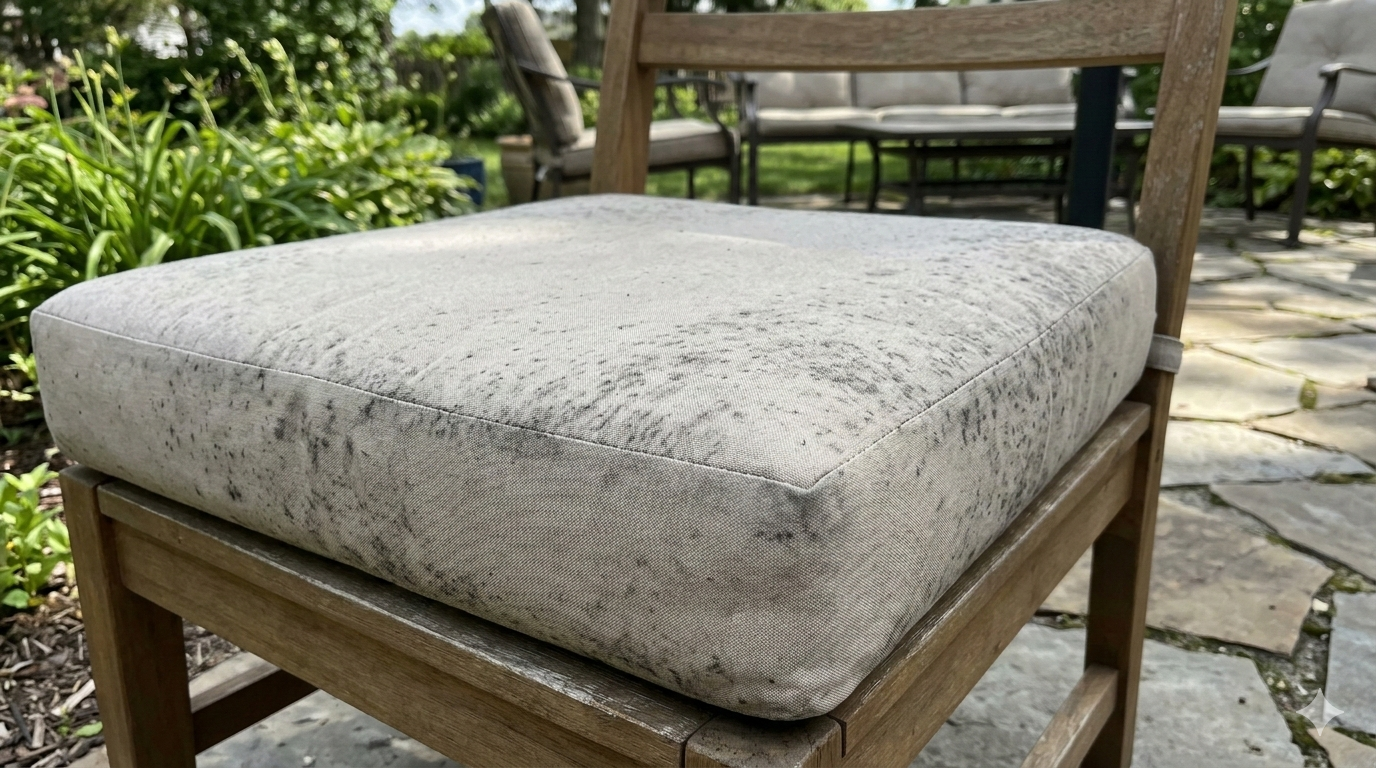
Mildew is a surface fungus that thrives in warm, damp conditions — exactly what East Tennessee summers deliver. It doesn't eat through outdoor fabric the way mold can damage indoor materials, but it creates unsightly dark spots and musty odors.
Common causes:
- Cushions left out during extended rain without drying
- Stacking wet cushions (traps moisture between layers)
- Storing cushions in airtight containers or plastic bins without airflow
- Pollen and organic debris sitting on fabric surfaces — mildew feeds on it
- Shaded furniture that rarely gets direct sun exposure
Mildew vs. Mold: What's the Difference?
For outdoor cushions, you're almost always dealing with mildew, not mold.
- Mildew: Surface-level, flat, gray or white patches. Wipes or brushes off relatively easily. Musty smell.
- Mold: Penetrates deeper, often fuzzy or raised, green or black. Harder to remove and may permanently stain fabric.
The cleaning process below works for both, but mold may require repeat treatments or professional cleaning.
Step-by-Step Mildew Removal
What you'll need: Soft-bristle brush, bucket, dish soap, white vinegar, spray bottle, garden hose, clean towels.
- Brush off loose mildew. Take cushions to a well-ventilated area (outdoors is ideal). Use a soft-bristle brush to sweep away loose surface mildew. Do this before wetting — water can spread spores into the fabric.
- Mix your cleaning solution. In a bucket, combine 1 cup white vinegar, 1 tablespoon dish soap, and 1 gallon of warm water. For performance outdoor fabrics (like Sunbrella), this is safe and effective.
- Apply and let it sit. Spray or sponge the solution onto affected areas. Let it sit for 15–20 minutes so the vinegar can break down the mildew.
- Scrub gently. Use a soft-bristle brush and work in small circular motions. Don't scrub aggressively — you want to lift the mildew, not damage the fabric weave.
- Rinse thoroughly. Use a garden hose to rinse all soap and vinegar residue. Leftover soap attracts dirt and can accelerate future mildew growth.
- Dry completely in the sun. Stand cushions upright so air circulates on all sides. Direct sunlight is your best friend here — UV light naturally kills remaining mildew spores. Flip cushions halfway through drying.
For Stubborn Stains
If the vinegar solution doesn't fully remove stains, try these approaches:
- Oxygen-based bleach (like OxiClean): Mix per package directions, apply to stains, let sit 30 minutes, scrub and rinse. Safe for most outdoor fabrics.
- Diluted bleach solution (1/4 cup bleach per gallon of water): Only use on solution-dyed acrylic fabrics like Sunbrella — check your fabric care tag first. Rinse thoroughly.
- Baking soda paste: Mix baking soda with a small amount of water to form a paste. Apply to stains, let dry, brush off, then rinse. Good for odor removal.
Never use: Undiluted bleach, pressure washers on cushion fabric, or abrasive scrubbing pads. These damage fabric coatings and void most warranties.
Prevention Habits
Daily / Weekly
- Stand cushions up after rain so all sides can dry. Even 30 minutes of air circulation makes a difference.
- Brush off pollen and leaf debris regularly — organic material feeds mildew.
- Don't stack wet cushions. If you need to bring them in quickly, lean them against a wall instead of stacking flat.
Seasonal
- Store cushions indoors during extended wet or winter seasons. A dry garage, basement, or closet works fine.
- Use breathable storage bags — never seal cushions in plastic bins or trash bags. Trapped moisture creates the perfect mildew environment.
- Clean cushions before storing. Putting away dirty cushions means you're storing mildew food with the fabric.
- Mid-summer deep clean: Give cushions a full wash in July or August when Tennessee humidity peaks. Prevention is easier than treatment.
Fabric Choices That Help
Not all outdoor fabrics handle moisture the same way. When shopping for replacement cushions or new outdoor furniture, look for:
- Solution-dyed acrylic (e.g., Sunbrella): Color is built into the fiber, making it resistant to fading, mildew, and staining. The industry standard for premium outdoor cushions.
- Quick-dry foam cores: Open-cell or reticulated foam drains water in minutes instead of hours. Standard indoor foam wrapped in outdoor fabric is a mildew trap.
- Mesh or perforated bottom panels: Some cushion constructions include drainage features that prevent water from pooling inside.
The fabric and the foam core matter equally. A great outdoor fabric over standard foam will still trap moisture inside the cushion.
When to Replace Cushions
Most quality outdoor cushions last 5–8+ years with proper care. Consider replacing when:
- Mildew stains won't come out after multiple treatments
- Fabric has lost its water repellency (water soaks in instead of beading)
- Foam core no longer bounces back or stays compressed
- Persistent musty odor even after thorough cleaning and sun drying
- Visible fabric degradation — thinning, tearing, or significant fading
Questions about your outdoor cushions? Bring them by our Knoxville or Maryville showroom — we can assess the fabric condition and recommend whether cleaning, recovering, or replacing makes the most sense.




%20issues%20with%20patio%20furniture.%20The%20good%20news:%20it's%20almost%20always%20preventable,%20and%20when%20it%20does%20happen,%20it's%20usually%20treatable%20wi...)
Leave a comment
This site is protected by hCaptcha and the hCaptcha Privacy Policy and Terms of Service apply.